 TroutWindow
Ephemeroptera · Heptageniidae
Quill Gordon
Early-season Appalachian mayfly royalty. Quill Gordons kick off spring freestone dreams; Blue Quills often ride nearby in the same cool window.
Taxa: Epeorus pleuralis (classic Quill Gordon); Blue Quill often Paraleptophlebia spp.
Early Epeorus/Blue Quill activity + fish feeding after a long winter = one of the best SE go windows.
Life stages
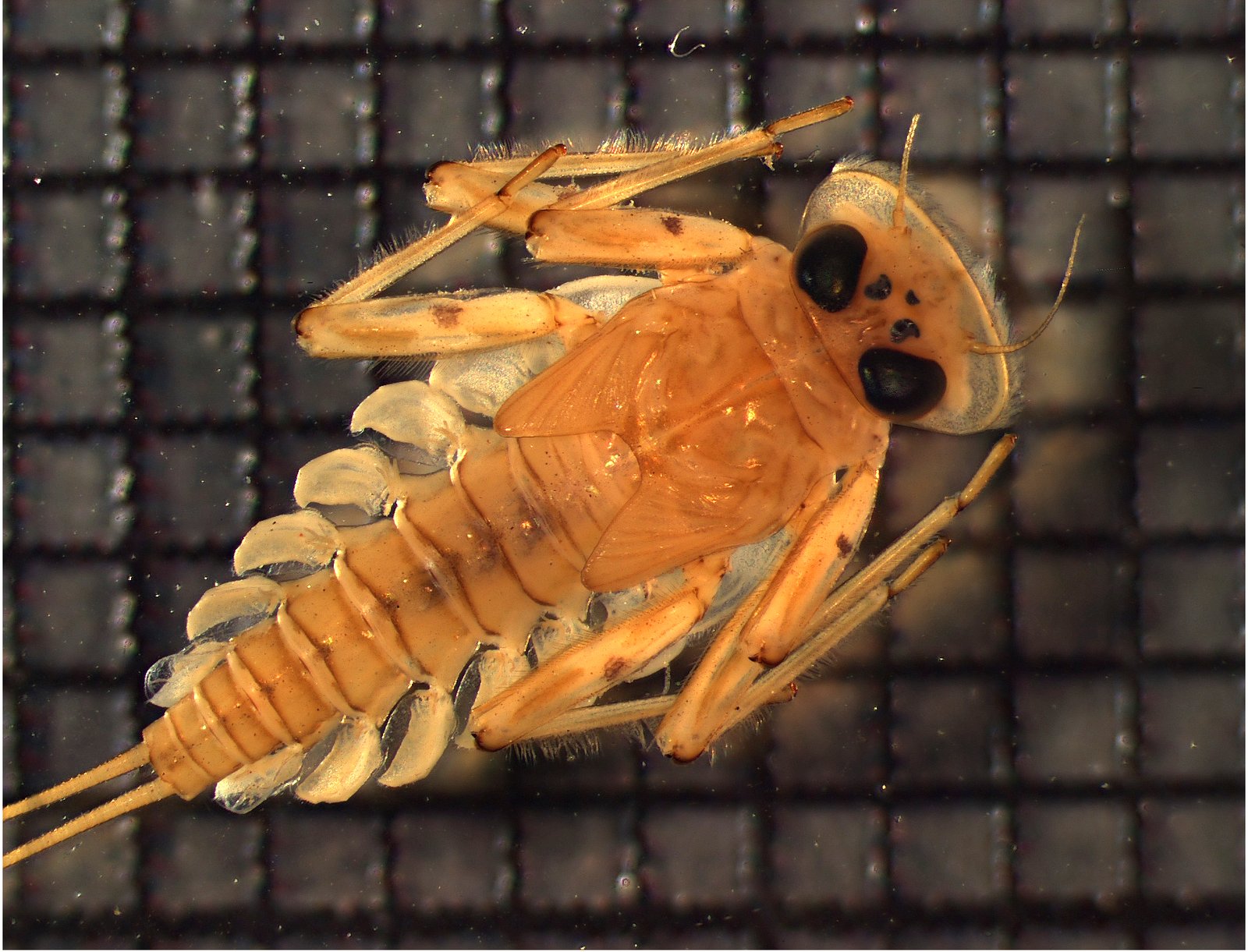
Mayfly path. Epeorus nymphs are flattened clingers on rocky freestone bottoms; duns show the classic quill body and slate wing.
When it matters in the Southern Apps (NC–VA)
Late Mar into Apr on SE freestones; Blue Quill in the Jan–Mar / early spring mix. High elevation can run weeks behind.
Matching artificials & techniques
Mimic the stage the fish are eating — size and silhouette first. Patterns are common SE shop language, not a brand list.
Quill Gordon nymph, Hare’s Ear, flat-bodied clinger nymphs
Rocky freestone lies; keep it near the bottom.
Quill Gordon dry, Adams, Blue Quill Comparadun
Classic early-season dry-fly water when duns are up.
Sources: Epeorus / Heptageniidae; USGS Epeorus nymph (PD). Dun/spinner: Coming soon (prior “adult” file was a nymph; spinner was a generic mayfly stand-in). Regional note: Taxonomy and stage language follow standard aquatic entomology (Ephemeroptera / Trichoptera / Plecoptera / Chironomidae). SE timing is a regional prior from the hatch calendar — confirm with thermometer, seine, and local shop/agency charts.
SE hatch calendar All bugs Life-cycle basics
More in the guide: BWO · Midges · Caddis · October Caddis · Sulphurs · Tricos