 TroutWindow
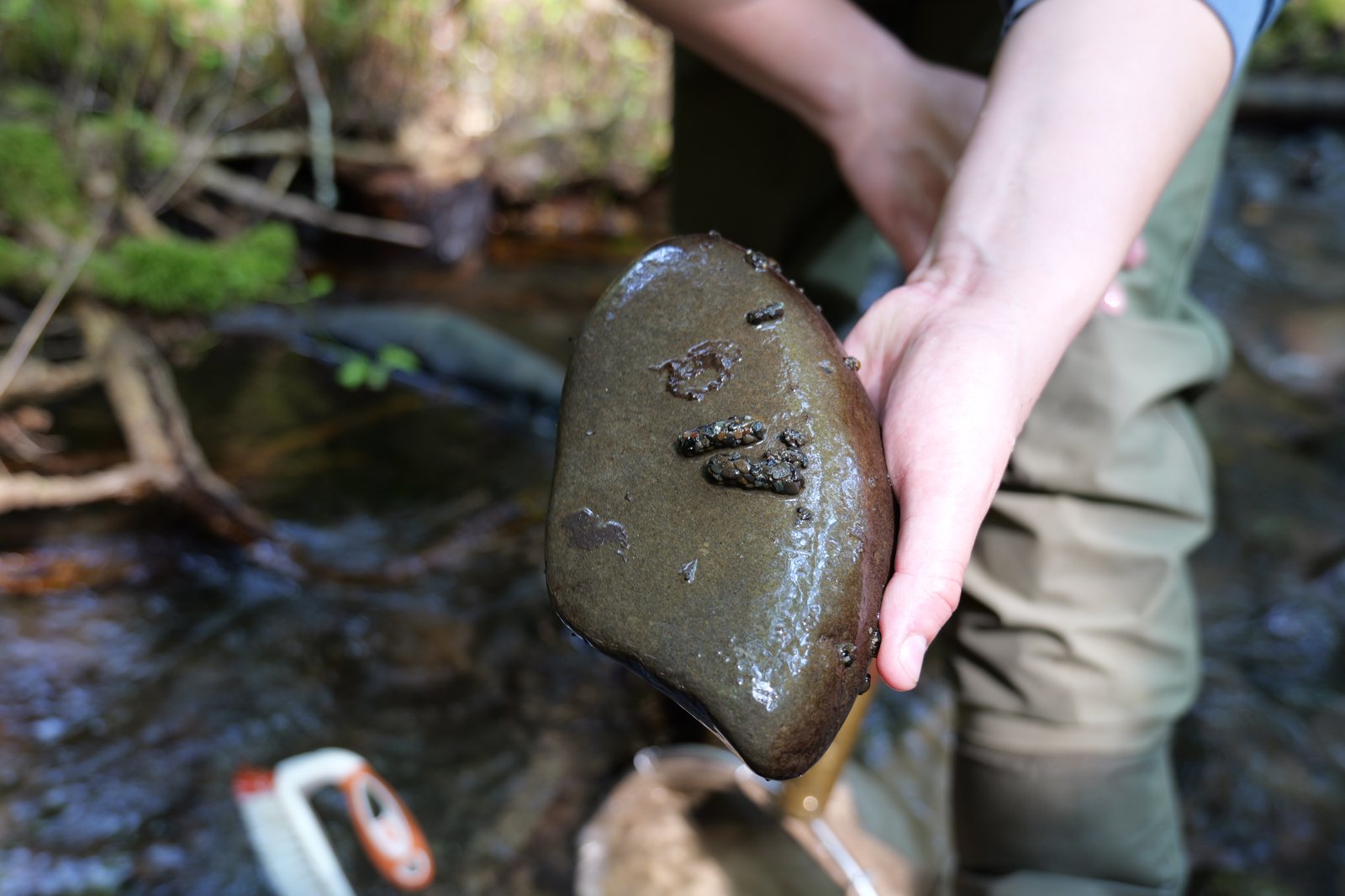
Trichoptera · Limnephilidae (and similar large fall caddis)
October Caddis
Big orange/brown fall caddis that can wake up freestone trout when summer terrestrials are fading. Think larger larva and adult silhouettes.
Taxa: Large fall caddis (often Dicosmoecus-like size/role in angler talk; confirm local ID)
Big fall bait present + cool water + fish moving = a real window, not just nostalgia.
Life stages
Same caddis path: egg → larva → pupa → adult. Anglers treat the big fall adult and the oversized larva as the main cues.
When it matters in the Southern Apps (NC–VA)
Oct–Dec prior on SE freestones. Confirm local presence; not every river has a true October Caddis pulse.
Matching artificials & techniques
Mimic the stage the fish are eating — size and silhouette first. Patterns are common SE shop language, not a brand list.
Orange/brown Cased Caddis, large Peeking Caddis
Weighted drifts along rocky freestone bottoms.
Orange Stimulator, large Elk Hair / October Caddis dry
Banks and soft edges; occasional skate.
Sources: General Trichoptera; SE calendar prior. Local species ID still needs founder QA vs NCWRC/VA DWR. Image kept: USGS cased caddis larvae (PD). Pupa/adult: Coming soon until large fall Limnephilidae adults confirmed. Regional note: Taxonomy and stage language follow standard aquatic entomology (Ephemeroptera / Trichoptera / Plecoptera / Chironomidae). SE timing is a regional prior from the hatch calendar — confirm with thermometer, seine, and local shop/agency charts.
SE hatch calendar All bugs Life-cycle basics
More in the guide: BWO · Midges · Caddis · Sulphurs · Tricos · Quill Gordon